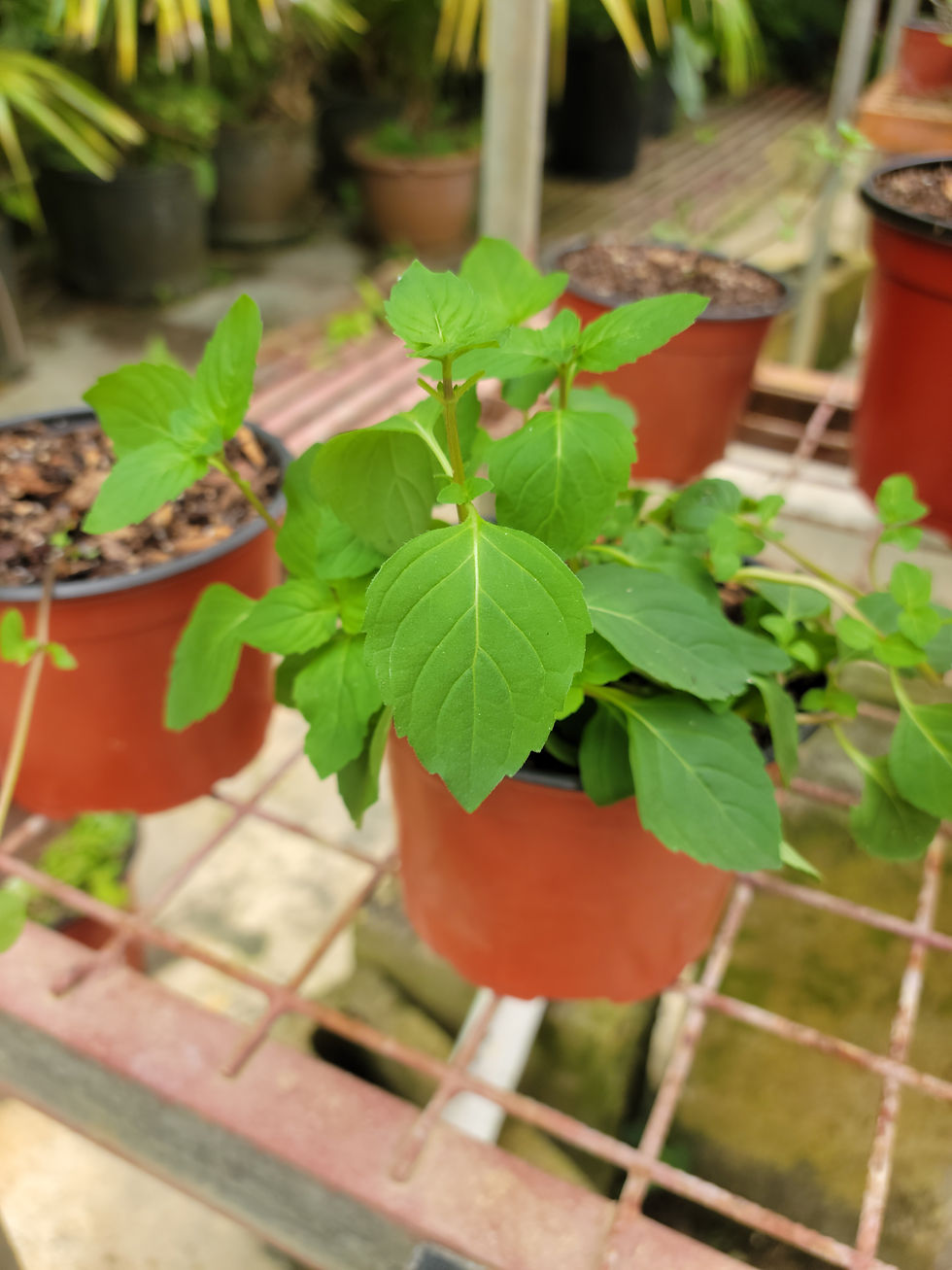
Holy Basil, also known as Tulsi, is a fragrant and highly valued herb celebrated for its aromatic leaves and deep cultural significance. This attractive plant features small to medium-sized green or purplish leaves with slightly toothed edges and a soft, velvety texture. When touched or crushed, the leaves release a warm, spicy, clove-like scent that instantly uplifts the senses. Slender flower spikes emerge above the foliage, carrying tiny purple or white blossoms that add delicate charm while attracting pollinators. With its lush appearance and soothing fragrance, Holy Basil is a standout addition to herb gardens, patios and wellness spaces. Holy Basil grows as a bushy, upright perennial or short-lived shrub in tropical climates, typically reaching 60 cm to 100 cm (2 to 3 feet) in height. It branches readily, forming a dense, leafy plant that responds well to regular pruning and harvesting. Thriving in full sun to partial shade, it prefers well-drained, fertile soil and consistent moisture, making it well-suited to Caribbean conditions. The plant grows quickly in warm weather and can be easily maintained in garden beds or containers. Frequent pinching encourages a fuller shape and delays flowering, ensuring a steady supply of fresh leaves. Its adaptability and vigorous growth make it an easy and rewarding herb for both beginners and experienced gardeners. Holy Basil is widely treasured for its herbal, medicinal and wellness benefits. Traditionally used across tropical regions, its leaves are commonly prepared as teas or infusions believed to support immune health, reduce stress, and promote respiratory and digestive wellness. Known for its adaptogenic properties, Holy Basil is often associated with helping the body cope with environmental and physical stress—making it especially valuable in the fast-paced modern Caribbean lifestyle. In addition to its medicinal uses, the plant serves as a natural insect-repellent herb, helping deter mosquitoes and other pests when grown around homes. Its flowers also attract bees and other pollinators, enhancing garden biodiversity. With its soothing aroma, cultural significance and wide-ranging uses, Holy Basil is a powerful and versatile addition to any Caribbean home garden.
Common Name: Holy Basil
Botanical Names:
- Ocimum Tenuiflorum
- Geniosporum Tenuiflorum
- Lumnitzera Tenuiflora
- Moschosma Tenuiflorum
- Ocimum Anisodorum
- Ocimum Caryophyllinum
- Ocimum Hirsutum
- Ocimum Inodorum
- Ocimum Monachorum
- Ocimum Sanctum
- Ocimum Scutellarioides
- Ocimum Subserratum
- Ocimum Tomentosum
- Ocimum Villosum
- Plectranthus Monachorum
Family: Lamiaceae
Other Names:
- Aroubaba
- Damole
- Domole
- Kaphrao
- Sacred Basil
- Tamole
- Tulasi
- Tulsi
Origin: Eastern Asia (China, Indian Subcontinent, Myanmar, Thailand, Cambodia, Laos, Vietnam, Malaysia, Indonesia, Philippines, New Guinea, Northern Australia)
Duration: Perennial
Habit:
Compact and bushy growth habit; Sturdy and erect stems that get woody; An abundance of slender, slightly hairy leaves that feature an attractive vibrant green to purple colour; Delicate purple-tinged flowers; Grows up to 60 to 100 centimetres (1.97 to 3.28 feet)
Hardiness: Hardy